
Faced with the climate emergency and growing constraints on transport stakeholders, hydrogen is increasingly emerging as a strategic energy for heavy-duty mobility.
Long perceived as a future technology, hydrogen is now entering a more concrete deployment phase, supported by a structured regulatory framework, significant investments and already meaningful real-world feedback.
But beyond announcements and political ambitions, where does hydrogen really stand today for professional mobility?
Hydrogen applied to mobility: technologies now operational
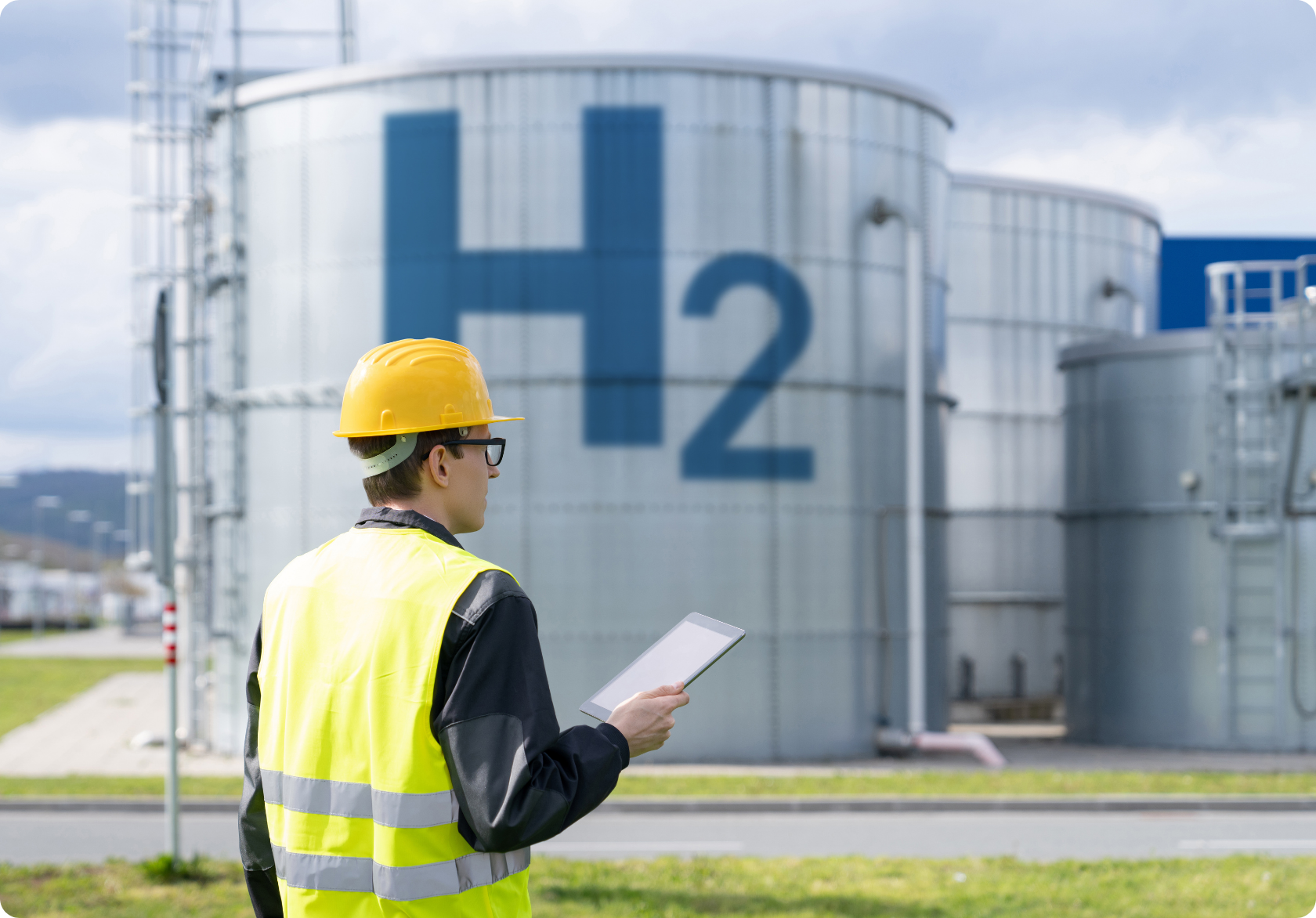
Hydrogen mobility currently relies on two complementary solutions designed to replace fossil fuel powertrains. Fuel Cell Electric Vehicles (FCEV) generate their own onboard electricity through a reaction between hydrogen and oxygen, with water as the only emission. Hydrogen Internal Combustion Engines (H2ICE) use hydrogen as a fuel in a specifically adapted thermal engine.
These technologies are no longer experimental. Taxi fleets and several hundred hydrogen trucks are already operating on European roads, collectively covering millions of kilometres.
For professional transport, hydrogen offers major operational advantages: fast refuelling, long range and limited impact on payload, unlike solutions based exclusively on batteries.
Beyond mobility use cases, hydrogen also addresses energy sovereignty challenges. It enables the valorisation of surplus renewable electricity and reduces Europe’s dependence on fossil fuel imports, while supporting the development of a local industrial value chain.
A structuring and incentive-driven European framework
The European Union has made hydrogen one of the pillars of its climate neutrality strategy for 2050. At the same time, it is important to underline that regulation related to mobility energies is constantly evolving. While the European trajectory is clearly oriented towards decarbonisation and the development of zero-emission solutions, regulatory modalities, timelines and implementation mechanisms remain adjustable over time.
Within this framework, CO₂ standards applicable to heavy-duty vehicles define particularly ambitious reduction pathways, reaching up to 90 percent by 2040, with a target of 100 percent zero-emission urban buses from 2035. The regulatory framework has recently evolved to provide greater flexibility to manufacturers, notably through the possibility of generating emission credits when performance exceeds set targets.
In parallel, the AFIR regulation provides for a structured rollout of hydrogen infrastructure, with the objective of deploying refuelling stations every 200 kilometres on the core European network by 2030. Each station will need to reach a minimum daily capacity of one tonne of hydrogen to ensure operations compatible with the needs of heavy transport.
This framework is supported by substantial financial investments through the Connecting Europe Facility and the European Hydrogen Bank. These levers aim to reduce risks for early adopters and support the gradual scaling up of the sector.
Belgium, a key player in the European hydrogen ecosystem
Belgium aims to become a European hub for renewable hydrogen.
Thanks to its geographical position, major seaports and dense industrial network, the country is well positioned to play a central role in the import, transit and transformation of green molecules.
This ambition is reflected in the development of new hydrogen transport infrastructures and cross-border interconnections, industrial leadership in the production of key components such as electrolysers, international agreements to secure supply, and pilot projects under real operating conditions dedicated to heavy-duty mobility.
A promising yet still complex trajectory
Despite its potential, hydrogen remains a sector under construction and must still overcome several challenges before widespread adoption in mobility can be achieved.
Its overall efficiency, from production to end use, currently stands between 30 and 35 percent, significantly lower than that of battery-electric solutions, due to energy losses at each stage of conversion, storage and transport.
Economic constraints also represent a major barrier. Production costs remain high, available volumes are still limited and uncertainty around electricity price evolution complicates medium-term project planning.
Finally, technical and operational hurdles persist. Fuel cell durability, sensitivity to impurities and the significant demand for renewable electricity and water for green hydrogen production add to the challenges linked to the deployment of refuelling infrastructure, particularly in terms of space and equipment.
Towards an energy mix and increasingly complex management
Decarbonised mobility does not rely on a single solution, but on the complementarity of energies.
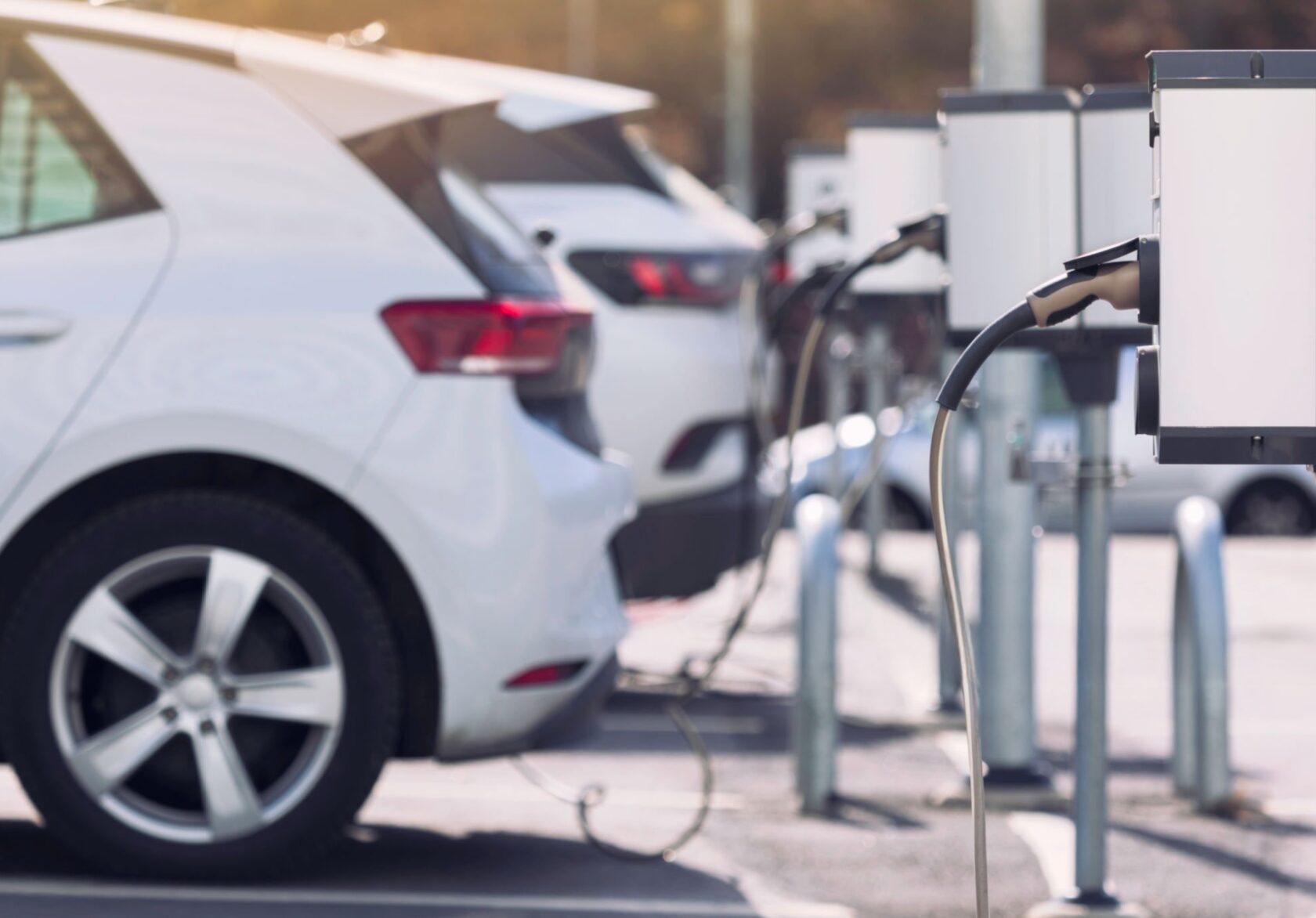
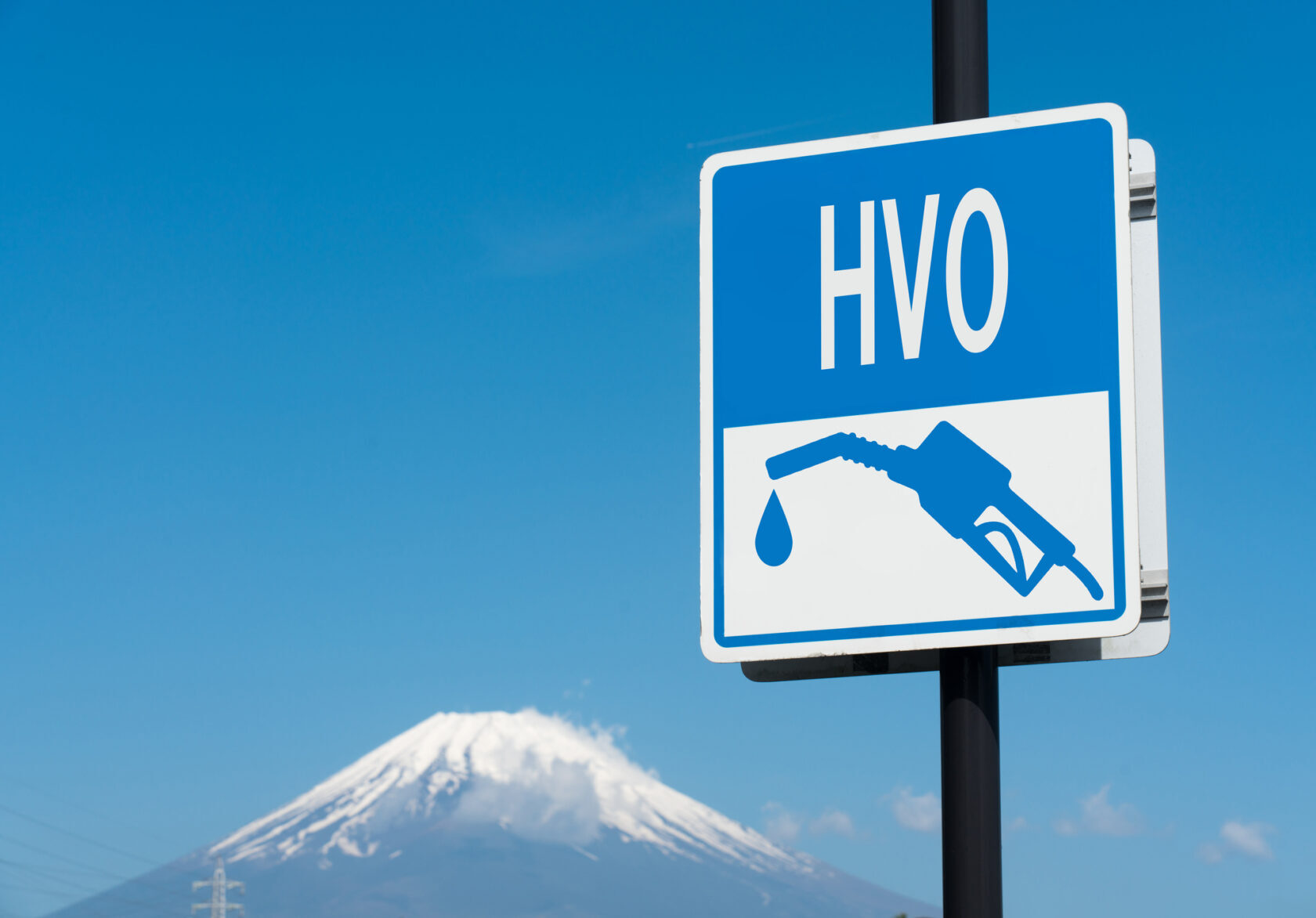
Batteries will undoubtedly dominate urban use cases, while hydrogen, HVO and synthetic fuels will become essential for long-distance and intensive applications.
This energy diversity improves the overall resilience of the system, but it significantly increases the operational complexity of fleet management.
The multiplication of suppliers, different units of measurement and heterogeneous data formats reduce visibility on consumption and make mobility energy management more complex for companies.
Hydrogen, a strategic energy to integrate into a global vision
Hydrogen is neither a miracle solution nor a marginal technology.
It establishes itself as a complementary pillar of mobility energies, particularly relevant for heavy and intensive use cases.
In this context, the real challenge for companies is no longer the choice of a single energy, but their ability to orchestrate an increasingly complex energy mix while maintaining a clear, reliable and actionable view of their data.
This is precisely where Telenaro comes into play. By supporting mobility stakeholders in the centralisation, structuring and management of their energy data, Telenaro enables them to turn complexity into a lever for control, performance and cost efficiency, whatever the energies used, today and tomorrow.
Sources :
- 7sur7.be. (2025, 5 novembre). Le premier parc solaire à hydrogène au monde construit à Namur.
- Collins, L. (2025, 17 décembre). Green hydrogen to get larger role in EU clean mobility after Commission proposes reversal of 2035 combustion-engine ban. Hydrogen Insight.
- Colruyt Group. (2025, 15 octobre). Belgium at the forefront in Europe’s hydrogen mobility revolution.
- European Climate, Infrastructure and Environment Executive Agency. (2025, 29 septembre). Hydrogen in the EU – Supporting Europe’s Transition to Climate Neutrality.
- European Climate, Infrastructure and Environment Executive Agency. (2026, 12 janvier). Your EU – Your Projects in Belgium: accelerating hydrogen.
- European Commission. (2025). Lorries, buses and coaches. Climate Action.
- European Commission. (2025, 17 novembre). Commission allocates over €600 million for 70 projects deploying alternative fuels infrastructure across Europe. Mobility and Transport.
- H2-Mobile. (2025, 3 juillet). Hydrogène : 30 industriels européens appellent l’UE à accélérer sur la mobilité.
- Hydrogen Europe. (2026). H2 mobility: The need for a combined approach to zero-emission transport.
- RTBF Actus. (2025, 19 novembre). Signature d’un accord de coopération belgo-brésilien en matière d’hydrogène vert à la COP30.
- Sibelga. (2026). Recherches sur le potentiel de l’hydrogène.
- SPF Economie. (2025, 15 octobre). Stratégie fédérale belge pour l’hydrogène.